AI Short Videos
First, let’s clarify one point: does YouTube support AI-generated short videos?
YouTube is currently cracking down on low-quality, repetitive, and nonsensical AI videos—in other words, “junk” videos.
However, when it comes to AI videos that are creative, entertaining, and meaningful, YouTube actually favors them; at the very least, the algorithms recommend them, and users enjoy them as well.
For instance, consider AI-generated videos featuring cinematic-quality special effects or adorable clips of kittens and puppies. As long as the visual result is engaging—even if we know full well that the video was created by AI—we still enjoy watching them.
This is because cinematic special effects—as well as depictions of things that do not exist in reality—are often extremely difficult to produce using traditional video production methods.
In terms of cost-efficiency, using AI is the fastest and most effective way to produce short videos, requiring surprisingly little computing power.
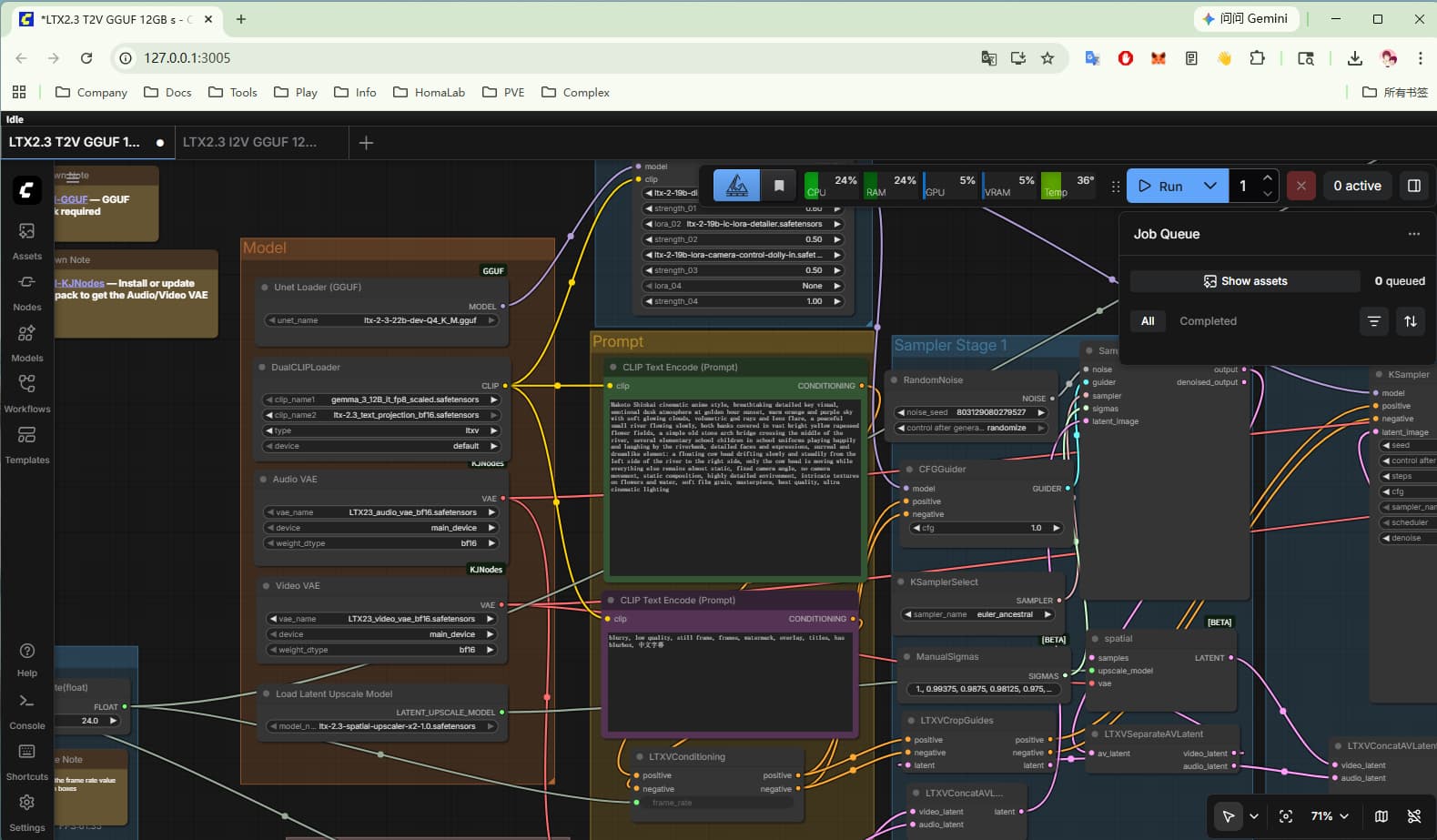
For example, using the open-source tool LTX 2.3, I can render a 15-second, 720p short video in just 10 minutes, even with my modest 3060 12GB graphics card.
These short videos can be generated directly from a text description and can even be produced complete with voiceovers or subtitles.
For me personally, this technology represents more than just a means to generate traffic via short videos; it serves as a tool that allows me to recreate scenes from my childhood—a time when I had no camera, only memories.
Transforming those memories into watchable, narrative-driven short videos is something that free, open-source AI can make a reality—without the need to hire painters, directors, actors, or other paid professionals.
LTX2.3
I am currently using LTX2.3 (via ComfyUI).
It supports generating videos based solely on text descriptions.
It also supports generating videos using a combination of text and images (in this mode, the AI primarily brings the images to life, resulting in a more precise and accurate output).
One of the great advantages of AI is that it allows you to generate content depicting places you cannot physically visit—such as alien worlds, the Arctic, the deep ocean, towering mountains, or vast deserts—as well as fantastical elements like monsters, magic, and other things that do not exist in reality.
If you want a short video featuring a cat, there is no need to actually adopt a kitten; you can simply use AI to generate one.
Short-form videos featuring cute kittens are incredibly popular on YouTube, attracting massive traffic—whether it’s a kitten cooking, talking, dancing, or engaging in all sorts of quirky antics.
Testing AI Tools
The AI tools I am currently familiar with are LTX 2.3 and WAN 2.2.
However, I haven’t actually used WAN 2.2; I’ve heard that it doesn’t generate audio, so you have to provide the voiceover yourself.
If you know of any better options, please feel free to recommend them to me.
Of course, I am not a professional short-video creator or filmmaker. While paid AI tools often deliver superior results, I won’t be specifically seeking them out to test.
My priority is to select and curate open-source, free AI tools.